Call us

Perception is Reality: How Cleanliness Impacts Customer Perceptions of Your Business

By Jared Sarbit
a clean dental office

The value of cleanliness is often hard to perceive. For many of us, “cleaning” is a series of chores we begrudgingly complete out of necessity; for others, it’s an art-form ingrained into the core of our being. No matter who you are, there is one fact that we can say with confidence: people prefer to be clean.
This preference permeates our being and influences everything that we do, every decision we make, and every opinion we form. Being clean is one thing, but feeling clean is another thing entirely.
Have you considered how cleanliness influences your business?

The Universal Appreciation for Cleanliness

The perceived cleanliness of something is a significant contributor to our perception of it. We form opinions of people, products, and places based on not just how clean it appears, but how clean it feels.
We natively associate clean spaces with health, positivity, and vibrance. Depictions of the future often contrast something dirty against something clean; the crime scene in a movie is almost always filthy; poverty is depicted with dirt and grime, whereas wealth and good fortune is projected via clean spaces and smooth, uncluttered design.
Some call it the iPhone effect, though it extends back much further than that.
We are naturally drawn to seek out and appreciate the cleaner, healthier world.

Our Appreciation of Cleanliness Isn’t Opinion – It’s Fact

This study, performed in early 2017, measured the public’s opinion and attitude of a facility based on its perceived cleanliness. In their words:

“This study proves the commonly held belief that taking a proactive approach to restroom cleanliness has a direct bearing on people’s perception about cleanliness in general.”
– John Putters, CEO of Visionstate Inc.

Another study that measured the customer rating of a hotel found that the level of cleanliness was 3x more influential in determining the overall customer rating compared to any other metric.

In a Social World, Small Details Matter

Most business owners today understand the importance of managing a positive reputation on social media. Facebook, and the social revolution it spearheaded, have become a second-nature mode of communication. We experience, we share, and we share in others experiences.
Over 90% of searchers read reviews prior to making a purchasing decision, facilitated by a now instinctive need to share with others how we feel and what we think. Online platforms such as Google+, Facebook, Yelp!, and a laundry-list of others not only make it easy to find reviews, but to leave one of your own as well.

The Cost of Dirt

Understanding the perception and importance of being clean is important to appreciating its value- and cost.
Many people cite cleanliness as the most important factor for consumers when evaluating a restaurant- it’s clear that providing a good dining experience is about more than the quality of food or the service you provide. When your cutlery is dirty or the tablecloth unkempt, how does that influence your meal?
Similarly, more than 50% of gym-goers expect their gym to be free of germs. Nobody wants to sit on someone else’s sweat, and it’s not hard to come to the conclusion that the equipment may be unsanitary when the floors are dirty and the bathrooms are in disarray.
Restaurants and gyms aren’t the only places where dirt is a dirterrant:

  • Would you feel comfortable in a dirty doctor’s office?
  • How well might you sleep on a dirty hotel bed?
  • What comes to mind when you touch sticky door handles at an office?
  • Are you eager to shake someone’s hand after watching them sneeze into it?

A thousand time per day – and maybe even more – you assess how clean something is when forming your opinion of it.

Cleanliness is Taken For Granted, but Don’t That Let You Devalue its Worth

There are many parts of life where the value of your efforts are plainly obvious: the more you invest into your health, the better you feel; the more you invest into a skill, the better you perform; the more you learn, the wiser you become.
Unfortunately, cleanliness is intangible. When done correctly, the best we can hope for is a passing remark about how clean the space or thing is. As cleaning professionals, our job is done best when our clients don’t think about cleanliness at all.
The true measure of success is when a space is simply assumed to be clean. When we notice the grime on the walls, the fingerprints on the glass, or the sticky something on the surfaces we touch, our perceptions sour.
When a space is clean and free from those distractions, we tend not to think about it at all.

Here’s a Handy Checklist

If your business serves customers on-site, you will benefit from by paying attention to the items below. Note that this list is not conclusive.

Keep all Visual Spaces Free of Obvious Grime

  • Ensure tables and chairs are clean
  • Keep surfaces free of clutter
  • Regularly wash windows and mirrors (especially mirrors)

Clean Where You Walk

  • Vacuum floors regularly
  • Mop up footprints and spills often
  • Keep shoe areas uncluttered and organized
  • Take anything off the floor that doesn’t need to be there

Pay Extra Attention to Sanitary Spaces

  • Ensure kitchens and food prep areas are always well-kept
  • Regularly wipe down appliance exteriors
  • Promptly address bad odours, especially if they’re food-borne

Don’t Forget the Small Stuff

  • Wipe down doors and door handles
  • Dust baseboards, especially in bathrooms (what else do we look at when sitting on the toilet?)
  • Dust fan blades, both ceiling and freestanding fans
  • Clean cold-air intakes
  • Discard ragged and damaged reading materials (particularly in waiting areas)
  • Clean out the dust and dead bugs that find their way inside ceiling lights

We’d Love to Help

Whether you own a gym or a dental office, you can count on the meticulous cleaning services we provide to keep your space in check. After all, as Alberta’s Cleaner Cleaners, you might say that it’s what we do best.

Cost Calculator

What Is In-House Cleaning Really Costing You?

Adjust the four numbers below to see your true annual in-house cleaning cost, an estimated cost range with Picture Perfect Cleaning, and what you'd save by making the switch.

Annual wages plus benefits for your cleaning staff
$
Annual spend on products, tools, and machine upkeep
$
Hours per week spent scheduling and supervising cleaning
hrs/wk
Average per cleaning staff member, per year
days/yr

Your Cost Comparison

True In-House Cost
$0
Est. PPC Cost Range
$0 – $0
Estimated Annual Savings by Outsourcing
$0
Based on the average of your PPC estimated range
Get a Custom Quote and See Your Savings →

Estimates are based on average commercial cleaning rates across Alberta and typical management and coverage costs. Your actual quote depends on square footage, service frequency, facility type, and scope of work. Request a custom quote above for an exact number.

The Hidden Cost of In-House Cleaning

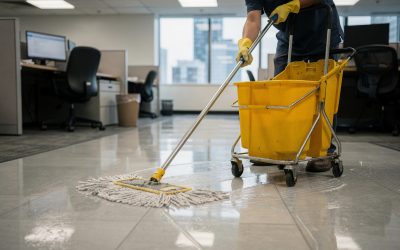
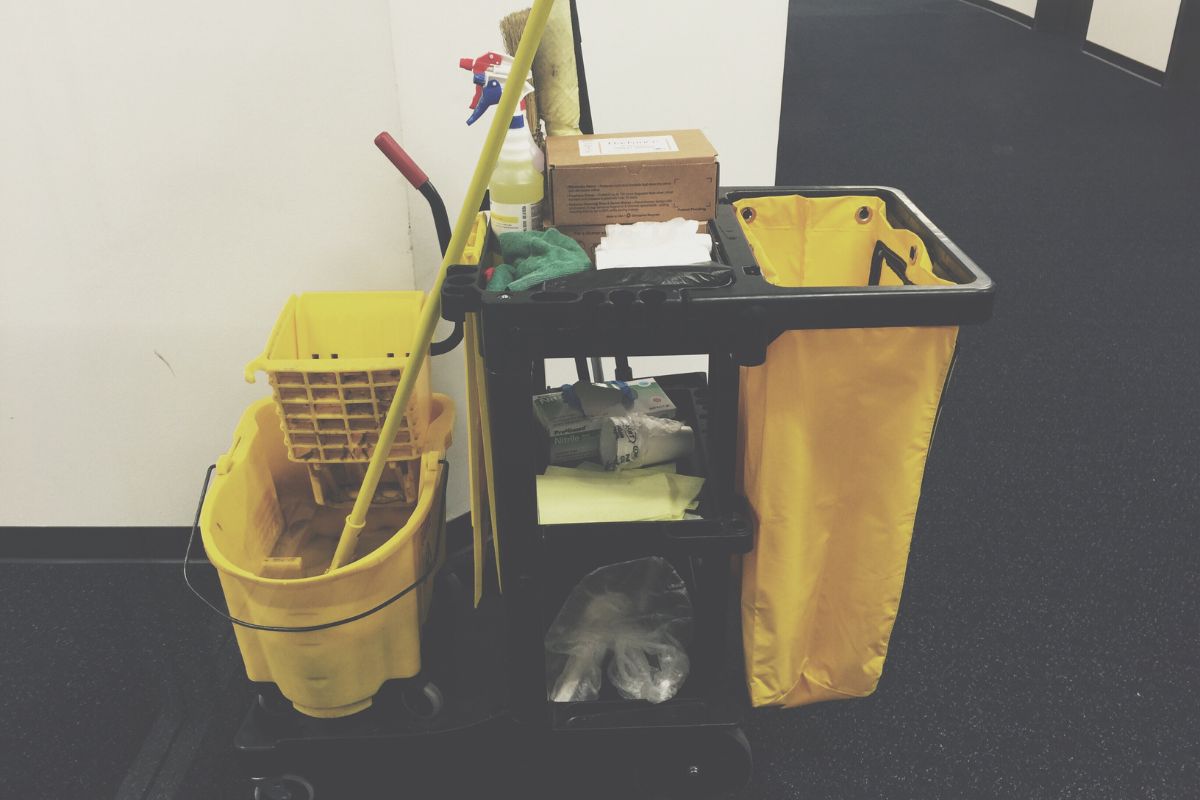
A professional cleaning supply cart inside a commercial office building with yellow mop and bucket attached to one side of a black push cart, and a garbage bag on the other.

A wage comparison only tells part of the story. Here’s what usually gets left out:

Wages and Benefits

Payroll is usually the first number people look at when they think about cleaning costs, but it rarely tells the whole story. Supplies, equipment, manager oversight, scheduling headaches, and the inevitable sick days all add up over time. By the time you account for everything, the true cost of keeping cleaning in-house can look very different from what’s on the payroll report. That’s exactly what our cost comparison tool is designed to help you see, along with what outsourcing might save.

Supplies and Equipment

Cleaning products, paper goods, vacuums, floor machines, and the replacement parts that keep them running all add up over the course of a year. Businesses that clean in-house often buy retail-grade supplies at retail prices because they don’t have access to the commercial pricing that a cleaning company gets from its suppliers. Equipment also breaks down, and replacing a vacuum or floor buffer every few years is a cost that rarely gets planned for in advance.

Management Time

Somebody has to schedule shifts, check the quality of the work, order more supplies when they run low, and step in when something gets missed. That’s real time pulled from a manager’s actual job, and it rarely gets assigned a dollar value, even though it should. If a facilities manager or office lead spends even a few hours a week on cleaning oversight, that’s time not spent on the parts of their role that actually move the business forward.

Absenteeism and Coverage Gaps

Sick days and missed shifts are part of running any team. When they happen, the work still has to get done, which usually means paying someone else to cover the shift or accepting that some tasks will have to wait. Over the course of a year, those extra costs can become surprisingly significant. There’s another effect that’s harder to measure, too. When cleaning is inconsistent, people notice. Employees notice it, clients notice it, and visitors notice it, even if they couldn’t tell you exactly why the space feels different.

Cost Category What It Covers
Wages & Benefits Annual pay for in-house cleaning staff
Supplies & Equipment Products, tools, and machine upkeep
Management Time Hours spent scheduling and supervising
Absenteeism Missed shifts and last-minute coverage

Why Outsourcing Often Comes Out Ahead

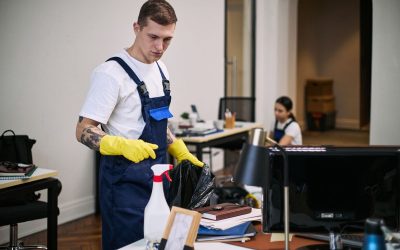
Two professional cleaners, both wearing light blue t-shirts under black coveralls with black caps in an office building ready for their work day.

Once you’ve seen your own numbers, the reasons behind the gap start to make sense.

Predictable Pricing

A cleaning company quote covers labor, supplies, and equipment on a single line. You know what you’re paying before the work starts, and that number doesn’t shift because someone called in sick or a vacuum broke down. Budgeting gets easier when the cost of cleaning is a single line item rather than four separate ones scattered across payroll, supplies, and management time.

No Coverage Gaps

When a member of an in-house cleaning team calls in sick, someone on your staff has to figure out what happens next. With a professional cleaning service, that responsibility shifts to the provider. If a cleaner is unavailable, arranging a replacement is part of the service, so your team isn’t left scrambling to fill the gap.

Accountability Built In

Picture Perfect Cleaning holds COR certification and provides regular service reporting, so you can see what’s being done and when, without spending your own hours checking on it. That’s the management time most in-house teams never get back. Our team also uses EcoLogo- and Green Seal-certified products, so you’re not trading cost savings for a lower cleaning standard.

Get Your Custom Quote

Wages are only one line in what in-house cleaning actually costs. Once you add in supplies, the hours a manager spends overseeing the crew, and the gaps left by sick days, the real number is usually higher than what shows up on a payroll report and often higher than what a professional service would charge for the same work. That’s the gap the tool above is built to show you, along with what outsourcing could put back in your budget.

Our cost comparison tool gives you a reasonable estimate of what you could save by switching to a professional cleaning service, not a final number. Every building is different, and factors like your cleaning schedule, the size of your facility, and the services you need will affect the actual cost. If you’d like a more accurate quote based on your space, contact Picture Perfect Cleaning, and we’ll walk you through the options.