Call us

Smartphones in Medical and Care Environments

By Jared Sarbit
smart phones in lock bags

Superbugs and viruses represent huge health threats, particularly in hospitals, long term care facilities, doctors’ offices and other medical and care environments.  Keeping surfaces sanitized is crucial to help prevent the spread of harmful viruses and bacteria.  Frequent hand washing and the use of hand sanitizers are also extremely important.  But all of those preventative measures can be undermined by a menace that is lurking in the hands of staff and many patients.  What is that menace?  It’s their smartphones.  

Smartphones are notorious hosts for all sorts of harmful germs. According to scientists at the University of Arizona, cellphones carry 10 times more bacteria than most toilet seats.  If someone sanitizes their hands but then pulls out their contaminated smartphone, their hands and faces are again potentially contaminated with anything from MRSA to C. Difficile to E. Coli.  Pass cards, keys, credit cards and other objects that we use every day can also present a serious infection transmission risk.

In a study published in the National Library of Medicine, the smartphones of 250 hospital staff were swabbed.  The study found that 99.2% of hospital staff smartphones were contaminated with potential pathogens, including MRSA and VRE. This shocking finding underscores the importance of implementing measures to properly sanitize smartphones and other items that medical staff and patients are using frequently. 

So what is the best way to address this?  Are traditional cleaning products a good choice for your smartphone?  As highlighted on an Apple support page, many iPhone models have a fingerprint-resistant oleophobic, oil repellent, coating.  According to Apple, cleaning products and abrasive materials can diminish the coating and may scratch your iPhone.  While Apple says that you can use Clorox disinfecting wipes on your phone, they also highlight that if liquid enters your phone, it can cause damage, and liquid damage is not covered by the Apple One-Year Limited Warranty.  Clorox disinfecting wipes are wet, so that sounds like a big risk to me, especially if you need to clean your phone frequently, like you should in a medical environment.  For at home use, if you are very careful, this might be an acceptable risk.  

CleanDevice Inc.

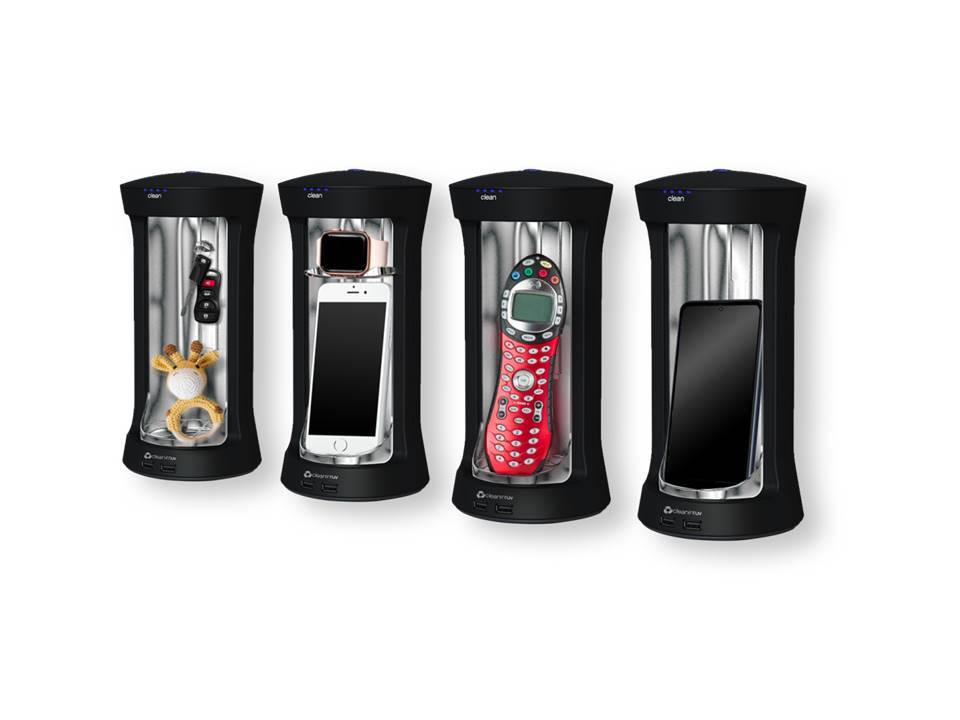
So what can be done in a busy medical or care environment, where a fast, simple and effective solution is needed?  There is an interesting technology that appears to be the answer.  UV-C light is proven to destroy viruses and bacteria.  According to a relevant Wikipedia article, UV-C kills microorganisms by destroying nucleic acids and disrupting their DNA.  There is actually a local Calgary company, CleanDevice, that offers a new UV-C sanitizer that can be used to quickly and effectively sanitize smartphones, keys, pass cards, and other items that you touch frequently throughout the day.  There are now many UV-C sanitizer products on the market, but CleanDevice says that many of those products are actually gimmicks and not effective.  A fascinating video documents a simple experiment where dosimeters were used to measure the amount of UV-C light delivered by several UV sanitizers.  The testing revealed that CleanDevice’s sanitizer, called the CleanintUV (CleanDevice is the exclusive distributor of Cleanint products in Canada), delivers far more millijoules of germ-killing UV-C light than the other products tested, some of which appeared to provide very little benefit or require far longer to deliver an acceptable dose of UV-C light.  One of the other benefits demonstrated in the video is the touchless operation of the CleanintUV.  After you place an item in the CleanintUV, the door automatically closes and then automatically opens when the cleaning cycle is complete, allowing you to maintain your hand hygiene.  With the other products, it is necessary to manually open and close the lid, potentially contaminating your hand in the process.      

So keep surfaces clean, wash your hands often, and sanitize smartphones frequently in order to keep staff and patients safe. 
Cost Calculator

What Is In-House Cleaning Really Costing You?

Adjust the four numbers below to see your true annual in-house cleaning cost, an estimated cost range with Picture Perfect Cleaning, and what you'd save by making the switch.

Annual wages plus benefits for your cleaning staff
$
Annual spend on products, tools, and machine upkeep
$
Hours per week spent scheduling and supervising cleaning
hrs/wk
Average per cleaning staff member, per year
days/yr

Your Cost Comparison

True In-House Cost
$0
Est. PPC Cost Range
$0 – $0
Estimated Annual Savings by Outsourcing
$0
Based on the average of your PPC estimated range
Get a Custom Quote and See Your Savings →

Estimates are based on average commercial cleaning rates across Alberta and typical management and coverage costs. Your actual quote depends on square footage, service frequency, facility type, and scope of work. Request a custom quote above for an exact number.

The Hidden Cost of In-House Cleaning

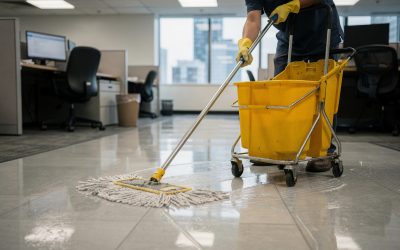
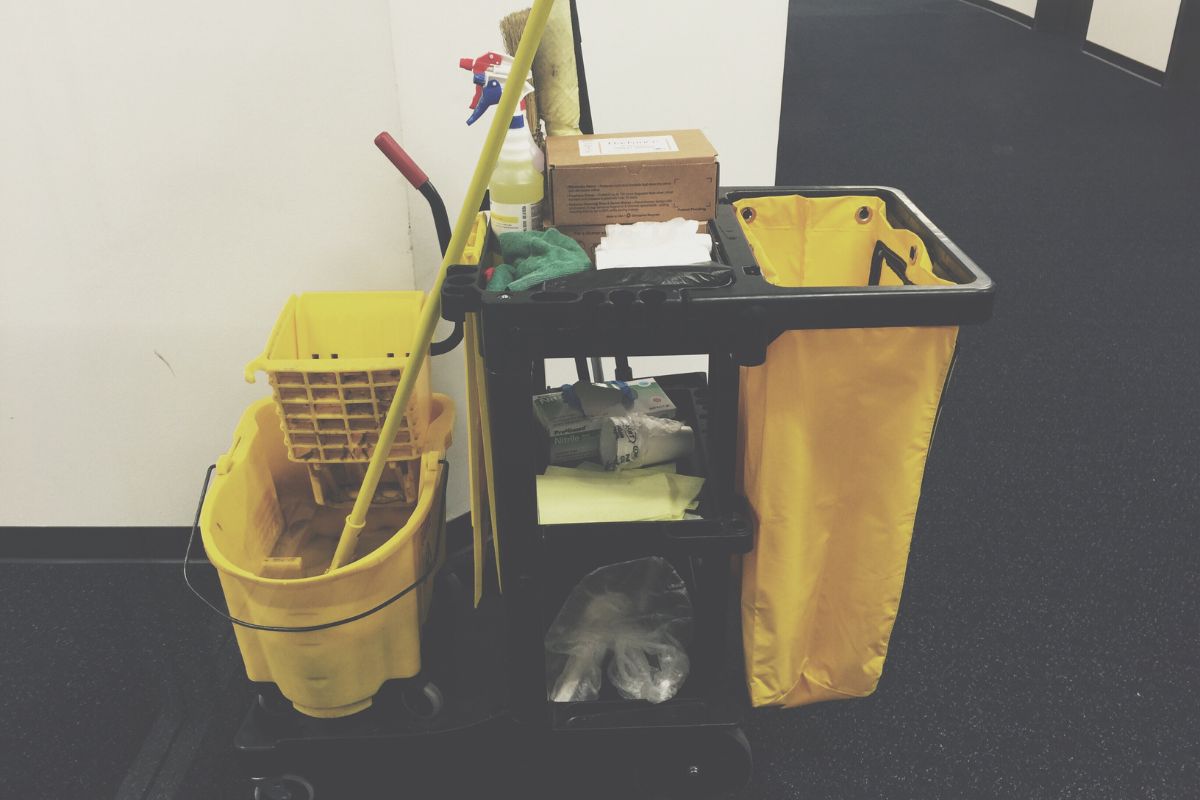
A professional cleaning supply cart inside a commercial office building with yellow mop and bucket attached to one side of a black push cart, and a garbage bag on the other.

A wage comparison only tells part of the story. Here’s what usually gets left out:

Wages and Benefits

Payroll is usually the first number people look at when they think about cleaning costs, but it rarely tells the whole story. Supplies, equipment, manager oversight, scheduling headaches, and the inevitable sick days all add up over time. By the time you account for everything, the true cost of keeping cleaning in-house can look very different from what’s on the payroll report. That’s exactly what our cost comparison tool is designed to help you see, along with what outsourcing might save.

Supplies and Equipment

Cleaning products, paper goods, vacuums, floor machines, and the replacement parts that keep them running all add up over the course of a year. Businesses that clean in-house often buy retail-grade supplies at retail prices because they don’t have access to the commercial pricing that a cleaning company gets from its suppliers. Equipment also breaks down, and replacing a vacuum or floor buffer every few years is a cost that rarely gets planned for in advance.

Management Time

Somebody has to schedule shifts, check the quality of the work, order more supplies when they run low, and step in when something gets missed. That’s real time pulled from a manager’s actual job, and it rarely gets assigned a dollar value, even though it should. If a facilities manager or office lead spends even a few hours a week on cleaning oversight, that’s time not spent on the parts of their role that actually move the business forward.

Absenteeism and Coverage Gaps

Sick days and missed shifts are part of running any team. When they happen, the work still has to get done, which usually means paying someone else to cover the shift or accepting that some tasks will have to wait. Over the course of a year, those extra costs can become surprisingly significant. There’s another effect that’s harder to measure, too. When cleaning is inconsistent, people notice. Employees notice it, clients notice it, and visitors notice it, even if they couldn’t tell you exactly why the space feels different.

Cost Category What It Covers
Wages & Benefits Annual pay for in-house cleaning staff
Supplies & Equipment Products, tools, and machine upkeep
Management Time Hours spent scheduling and supervising
Absenteeism Missed shifts and last-minute coverage

Why Outsourcing Often Comes Out Ahead

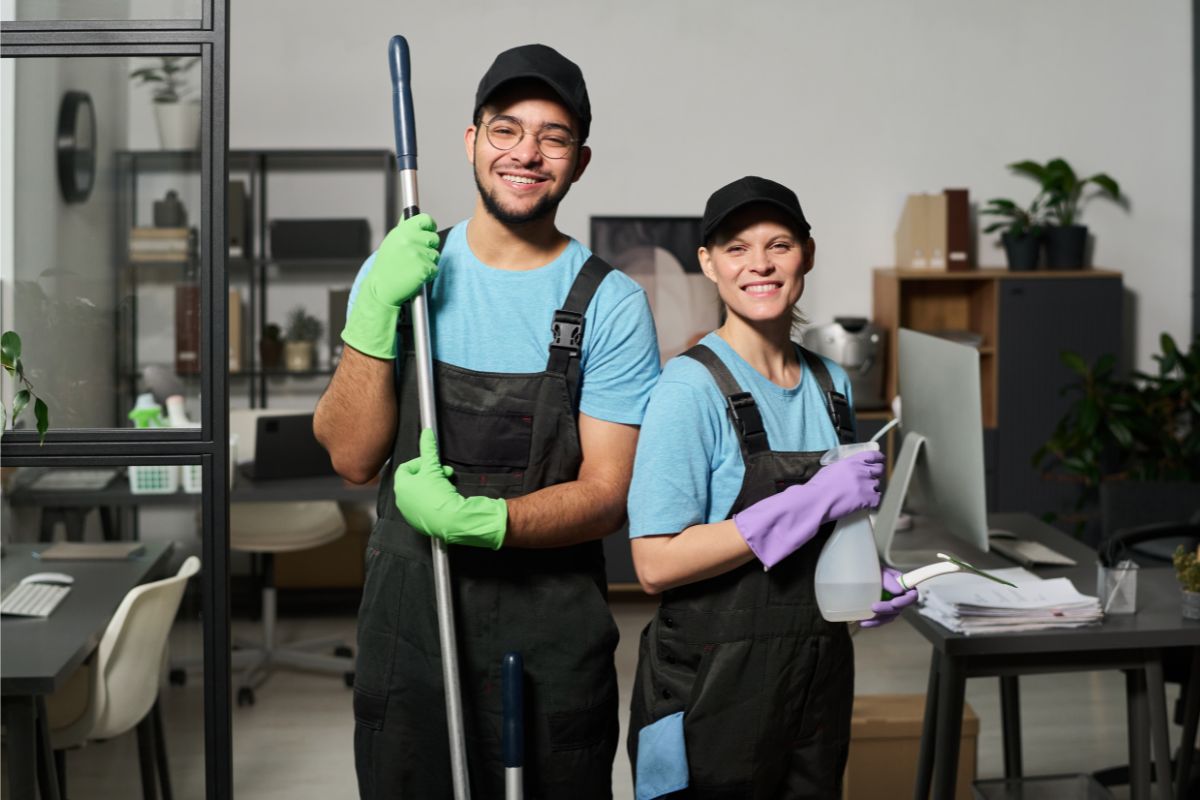
Two professional cleaners, both wearing light blue t-shirts under black coveralls with black caps in an office building ready for their work day.

Once you’ve seen your own numbers, the reasons behind the gap start to make sense.

Predictable Pricing

A cleaning company quote covers labor, supplies, and equipment on a single line. You know what you’re paying before the work starts, and that number doesn’t shift because someone called in sick or a vacuum broke down. Budgeting gets easier when the cost of cleaning is a single line item rather than four separate ones scattered across payroll, supplies, and management time.

No Coverage Gaps

When a member of an in-house cleaning team calls in sick, someone on your staff has to figure out what happens next. With a professional cleaning service, that responsibility shifts to the provider. If a cleaner is unavailable, arranging a replacement is part of the service, so your team isn’t left scrambling to fill the gap.

Accountability Built In

Picture Perfect Cleaning holds COR certification and provides regular service reporting, so you can see what’s being done and when, without spending your own hours checking on it. That’s the management time most in-house teams never get back. Our team also uses EcoLogo- and Green Seal-certified products, so you’re not trading cost savings for a lower cleaning standard.

Get Your Custom Quote

Wages are only one line in what in-house cleaning actually costs. Once you add in supplies, the hours a manager spends overseeing the crew, and the gaps left by sick days, the real number is usually higher than what shows up on a payroll report and often higher than what a professional service would charge for the same work. That’s the gap the tool above is built to show you, along with what outsourcing could put back in your budget.

Our cost comparison tool gives you a reasonable estimate of what you could save by switching to a professional cleaning service, not a final number. Every building is different, and factors like your cleaning schedule, the size of your facility, and the services you need will affect the actual cost. If you’d like a more accurate quote based on your space, contact Picture Perfect Cleaning, and we’ll walk you through the options.