When shopping for cleaning products, how do you determine which to buy? Do you go with the most recognizable logo? Or the lowest price? How about whether a product is eco-friendly?
While marketing and price will always be important factors, more and more of us shop with our own safety and the environment in mind. We’re taking notice of what manufacturers put into the products we use and are scrutinizing how safe they are for our families and the environment.
Many products these days claim to be eco-friendly, all-natural, or eco-friendly. But why are manufacturers pushing the eco-friendly angle? And how do they convey this eco-friendly message to their customers?
They do this by applying for independent eco-certification that the manufacturer then puts on their product using easily recognizable and trusted symbols. These certifications tell customers that the product has achieved a certain environmental standard.
In this article, we’ll dive a little deeper into the world of eco-labels on cleaning products.
What Are Eco-Labels
Eco-labels are trusted third-party symbols that manufacturers put on their packaging to let customers know their products are less harmful and better for the environment compared to similar products.
Risks Of VOC’s (Volatile Organic Compounds)
Many products use eco-labels from canned fish to timber companies to household appliances. But cleaning products are somewhat unique in that they are rinsed down the drain and into our water systems and evaporate into the environment.
The chemicals that make cleaning and other products so effective also can be dangerous to people and the environment. VOCs – Volatile organic compounds – are compounds that are released from products or their processes and can be very harmful to humans, pets, and the environment.
The risks of these compounds often found in cleaning products play a key role in why the manufacturers seek out third-party eco-label certifications. They show the customer they care about health, safety, and the environment. There may be a genuine effort for these cleaning companies to be better for the environment, but these labels certainly act as an effective marketing tool to help boost sales.
Benefits Of Eco-Labels
Many companies, including cleaning product companies, seek out third-party eco-label certifications for various reasons.
Validates Eco-Friendly Claim – Eco-labels lend credibility to manufacturers’ eco-friendly claims. It also serves to define eco-friendly standards and ensure those standards have been met.
Gain Trust Among Buyers – Eco-labels are recognized and trusted by both commercial buyers and consumers, increasing brand loyalty and sales. Cost and other factors being equal, customers will more often reach for a cleaning product with an eco-label over one that does not.
Provides Easy-Buy Short Cut – Eco-labels are easy to recognize and read, providing a simple and trustworthy guide to quickly purchase products in overcrowded supermarkets.
Provides Incentives For Other Companies – Eco-labels can be a catalyst for the wider good. If environmentally-friendly companies sell better, other companies are likely to follow suit and raise their environmental standards.
Conclusion
There can be a lot of confusion around eco-labels, which threatens to undermine the entire eco-friendly system. One of the problems of the eco-friendly movement is the temptation for companies to exaggerate their claims, or make outright false claims.
Whether you’re cleaning commercial sites like offices, schools, and healthcare facilities, or your own home, it’s important to use products that are good for the environment and safe for you.
If you are someone who cares enough about the environment to buy products with eco-friendly labels, it’s always a good idea to do your research and better understand what each of them means.
There are a lot of different labels, from green and eco-friendly, to non-toxic, cruelty-free, organic, natural, green seal, ecologo, and many more.
Have questions about how safe and environmentally friendly cleaning products are? Give Picture Perfect Cleaning a call today.
The Hidden Cost of In-House Cleaning
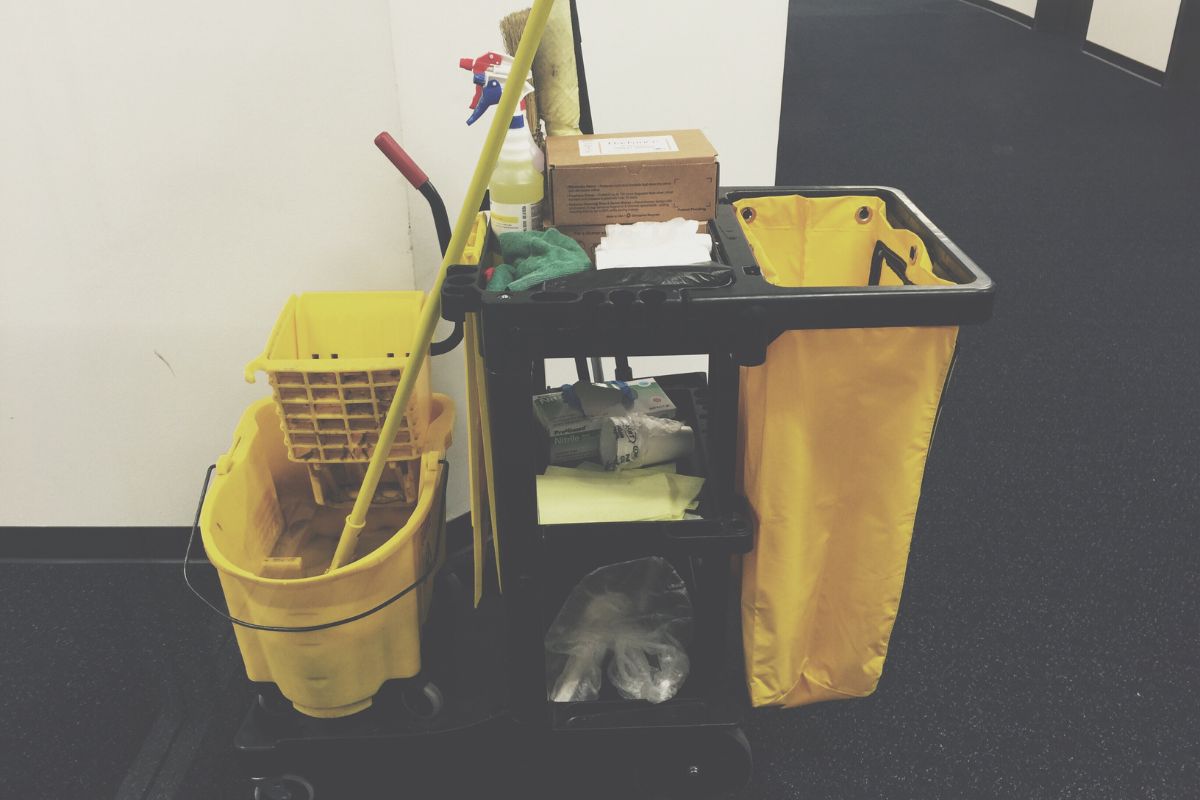
A wage comparison only tells part of the story. Here’s what usually gets left out:
Wages and Benefits
Payroll is usually the first number people look at when they think about cleaning costs, but it rarely tells the whole story. Supplies, equipment, manager oversight, scheduling headaches, and the inevitable sick days all add up over time. By the time you account for everything, the true cost of keeping cleaning in-house can look very different from what’s on the payroll report. That’s exactly what our cost comparison tool is designed to help you see, along with what outsourcing might save.
Supplies and Equipment
Cleaning products, paper goods, vacuums, floor machines, and the replacement parts that keep them running all add up over the course of a year. Businesses that clean in-house often buy retail-grade supplies at retail prices because they don’t have access to the commercial pricing that a cleaning company gets from its suppliers. Equipment also breaks down, and replacing a vacuum or floor buffer every few years is a cost that rarely gets planned for in advance.
Management Time
Somebody has to schedule shifts, check the quality of the work, order more supplies when they run low, and step in when something gets missed. That’s real time pulled from a manager’s actual job, and it rarely gets assigned a dollar value, even though it should. If a facilities manager or office lead spends even a few hours a week on cleaning oversight, that’s time not spent on the parts of their role that actually move the business forward.
Absenteeism and Coverage Gaps
Sick days and missed shifts are part of running any team. When they happen, the work still has to get done, which usually means paying someone else to cover the shift or accepting that some tasks will have to wait. Over the course of a year, those extra costs can become surprisingly significant. There’s another effect that’s harder to measure, too. When cleaning is inconsistent, people notice. Employees notice it, clients notice it, and visitors notice it, even if they couldn’t tell you exactly why the space feels different.
| Cost Category |
What It Covers |
| Wages & Benefits |
Annual pay for in-house cleaning staff |
| Supplies & Equipment |
Products, tools, and machine upkeep |
| Management Time |
Hours spent scheduling and supervising |
| Absenteeism |
Missed shifts and last-minute coverage |
Why Outsourcing Often Comes Out Ahead

Once you’ve seen your own numbers, the reasons behind the gap start to make sense.
Predictable Pricing
A cleaning company quote covers labor, supplies, and equipment on a single line. You know what you’re paying before the work starts, and that number doesn’t shift because someone called in sick or a vacuum broke down. Budgeting gets easier when the cost of cleaning is a single line item rather than four separate ones scattered across payroll, supplies, and management time.
No Coverage Gaps
When a member of an in-house cleaning team calls in sick, someone on your staff has to figure out what happens next. With a professional cleaning service, that responsibility shifts to the provider. If a cleaner is unavailable, arranging a replacement is part of the service, so your team isn’t left scrambling to fill the gap.
Accountability Built In
Picture Perfect Cleaning holds COR certification and provides regular service reporting, so you can see what’s being done and when, without spending your own hours checking on it. That’s the management time most in-house teams never get back. Our team also uses EcoLogo- and Green Seal-certified products, so you’re not trading cost savings for a lower cleaning standard.
Get Your Custom Quote
Wages are only one line in what in-house cleaning actually costs. Once you add in supplies, the hours a manager spends overseeing the crew, and the gaps left by sick days, the real number is usually higher than what shows up on a payroll report and often higher than what a professional service would charge for the same work. That’s the gap the tool above is built to show you, along with what outsourcing could put back in your budget.
Our cost comparison tool gives you a reasonable estimate of what you could save by switching to a professional cleaning service, not a final number. Every building is different, and factors like your cleaning schedule, the size of your facility, and the services you need will affect the actual cost. If you’d like a more accurate quote based on your space, contact Picture Perfect Cleaning, and we’ll walk you through the options.