Summary
Floor buffing and polishing are two distinct methods for restoring shine and improving the appearance of commercial floors. While both use specialized machines to clean and smooth surfaces, buffing focuses on removing surface dirt and scuffs to restore a moderate gloss, whereas polishing (burnishing) uses higher speeds and heavier pressure to achieve a high-gloss finish.
| Time to Read | ~6-7 minutes |
| What You’ll Learn | The difference between floor buffing and floor polishing When each method is most effective How each method impacts cost and maintenance Which option works best for different floor types and traffic levels |
| Next Steps | Evaluate the condition and traffic level of your floors Identify whether your floors need restoration or maintenance Compare buffing vs polishing based on budget and long-term care Contact Picture Perfect Cleaning for a floor assessment |
Updated February 2026
Floor buffing and floor polishing are two methods of restoring that eye-catching sparkle to your commercial floor using high-tech and assisted machines. While both methods use specialized equipment and get your floors nice and shiny, they have different purposes and functions.
What’s the difference between buffing and polishing, you ask? Though both are often used interchangeably and share similarities, they do have some key differences. The experts at Picture Perfect Cleaning are here to help explain both so you know what your commercial floor needs to shine like new.
Buffing vs Polishing Comparison Chart
| Requirement | Buffing | Polishing |
| Purpose | Restore shine and smooth minor imperfections | Create a high-gloss finish and surface refinement |
| Intensity | Low to Medium | High |
| Pad Type | Softer (Beige, Red, or White) | Aggressive/Burnishing (Aqua, Pink) |
| Surface Impact | Cleans surface dirt & scuffs | Levels finish & hardens wax |
| Longevity | Short-term (Maintenance) | Long-term (Restoration) |
| Labor Cost | Lower | Higher (due to equipment/prep) |
| Best For | Routine maintenance | Restoring dull or heavily used floors |
Buffing
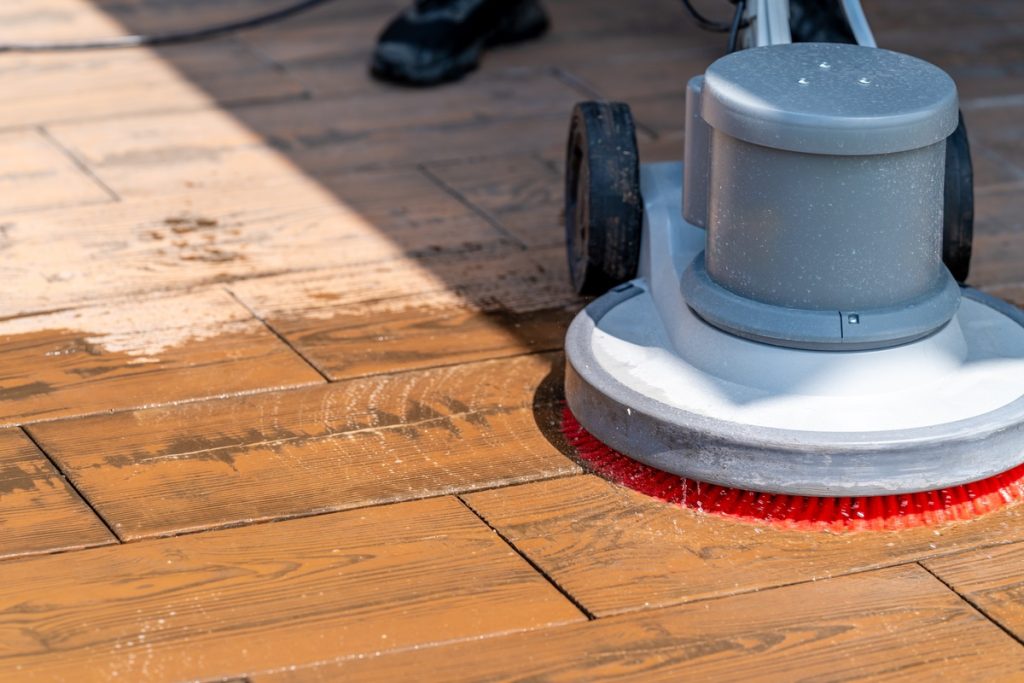
Buffing is a maintenance process that cleans the floor surface while restoring its original shine. Using a buffing machine, spinning pads gently remove dirt, light scratches, and scuff marks that can’t be addressed with regular mopping.
There are two main types:
- Spray buffing: Uses a specialized liquid to dissolve dirt and scuffs, with machines typically operating up to 1,000 RPM.
- Dry buffing (high-speed): Uses no liquid and operates above 1,000 RPM, producing a smoother finish.
Both buffing methods are recommended for professional operators. This is not just because floors in high-traffic commercial areas tend to need regular maintenance, which can be time-consuming. It’s also because the machines required for spray and dry buffing are quite expensive and require a high level of skill to use properly.
Learn More: Tips to Keep High-Traffic Areas in Your Facility Clean
What It’s Best For
Buffing is best for routine maintenance in high-traffic areas where light scuffs and dirt buildup need to be removed without stripping the floor’s finish. It’s also suitable for spaces where a clean, moderate shine is sufficient.
Pros & Cons of Buffing
| Pros | Cons |
| Cleans and shines in one step | Gloss is not as deep or long-lasting |
| Less aggressive; preserves floor finish | Ineffective for deep scratches or gouges |
| Cost-effective for frequent intervals | Requires more frequent repetition |
| Safe for most hard floor types | Can leave “swirl” marks if done improperly |
Polishing
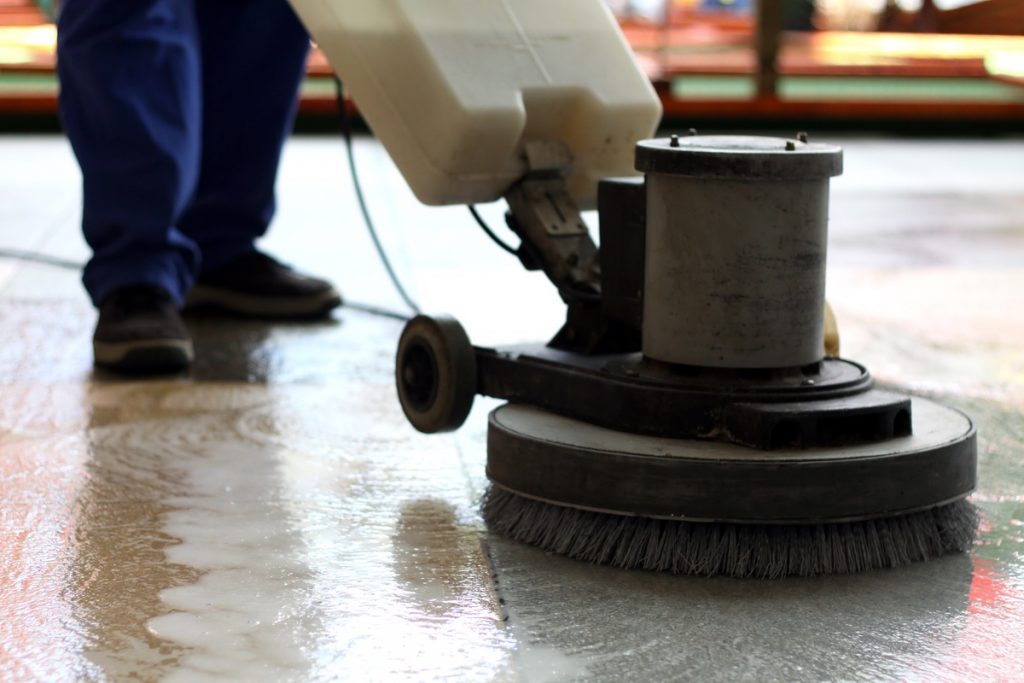
Polishing, or burnishing, uses a larger, heavier machine that spins at much higher speeds (typically 1,500–2,000 RPM). The combination of speed and pressure creates a highly reflective, smooth finish while removing more noticeable imperfections like small chips or bumps.
This process works more quickly than buffing, making it better suited for large commercial spaces or industrial floors where time efficiency is important.
Learn More: Professional Equipment Used for Cleaning Industrial Sites
What It’s Best For
Polishing is ideal for floors that require a deep, mirror-like gloss or need light surface leveling. It’s often chosen for showrooms, retail stores, or high-visibility areas where appearance is a priority.
Pros & Cons of Polishing
| Pros | Cons |
| Acheive an ultra-high-gloss, mirror finish | Removes a thin layer of finish each time |
| Hardens the finish, making it more durable | More expensive equipment and labor |
| Faster coverage for large, open areas | Not suitable for uneven or damaged floors |
| Long-lasting results between treatments | Requires high operator skill to avoid burns |
Buffing & Polishing Benefits & Uses
| Feature | Buffing | Polishing (Burnishing) |
| Machine Speed (RPM) | Up to ~1,000 (spray); 1,000+ (dry) | 1,500–2,000 |
| Finish Level | Moderate gloss | High-gloss, “wet look” |
| Cleaning Ability | Removes dirt, light scuffs | Removes dirt, scuffs, and minor surface unevenness |
| Best For | Routine maintenance, high-traffic areas | Showrooms, retail floors, large open spaces |
| How Fast? | Moderate | Faster coverage per square foot |
| How Often? | More frequent (part of regular upkeep) | Less frequent (periodic deep restoration) |
| Operator Skill Required | Professional recommended | Professional recommended |
Buffing and polishing your floor doesn’t just bring out its shine, but also contributes to its longevity. Removing the built-up dirt, grime, and scratches slows the wear and tear of your flooring to help extend its lifespan.
Both methods can be used on many types of flooring, including but not limited to laminate, tile, stone, concrete, and marble.
Making Your Commercial Flooring Shine
Buffing is a versatile, lower-intensity method that can be used as part of regular upkeep to keep floors looking presentable without removing too much of the finish. Polishing is a higher-intensity treatment designed for floors that need a dramatic, reflective shine or light surface correction, but it’s generally performed less often due to its impact on the finish and higher equipment demands.
In many commercial maintenance programs, both methods are used at different intervals. It’s recommended to use buffing to maintain your floor’s appearance, and use polishing as a periodic “reset” for high-visibility or heavily worn floors.
Want to impress your customers with clean, shiny, and bright floors? If you need some help determining whether your floor needs buffing, polishing, or both, then contact the commercial flooring experts at Picture Perfect Cleaning today.