Summary
Industrial facilities require specialized cleaning equipment to manage heavy dirt, grease, debris, and contamination across large, complex spaces. Commercial janitorial companies must use tools such as pressure washers, industrial vacuum cleaners, floor scrubbers, steam cleaners, and floor buffers to clean industrial environments efficiently while supporting sanitation standards and maintaining safety. Using the right equipment for each surface and application helps ensure consistent, effective cleaning and long-term facility maintenance.
Professional Equipment Used for Cleaning Industrial Sites
| Time to Read | ~5–6 minutes |
| What You’ll Learn | – Why industrial sites require professional-grade equipment (not basic tools) – The most common industrial cleaning machines and what each one is best for (pressure washers, industrial vacuums, floor scrubbers, steam cleaners, buffers/polishers) – How the right equipment improves safety, sanitation, and compliance across large facilities |
| Next Steps | – Identify the main soil types in your facility (dust/debris, oil/grease, grime, contamination risk). – Hire professional janitorial services that use appropriate methods and equipment to clean your facility. |
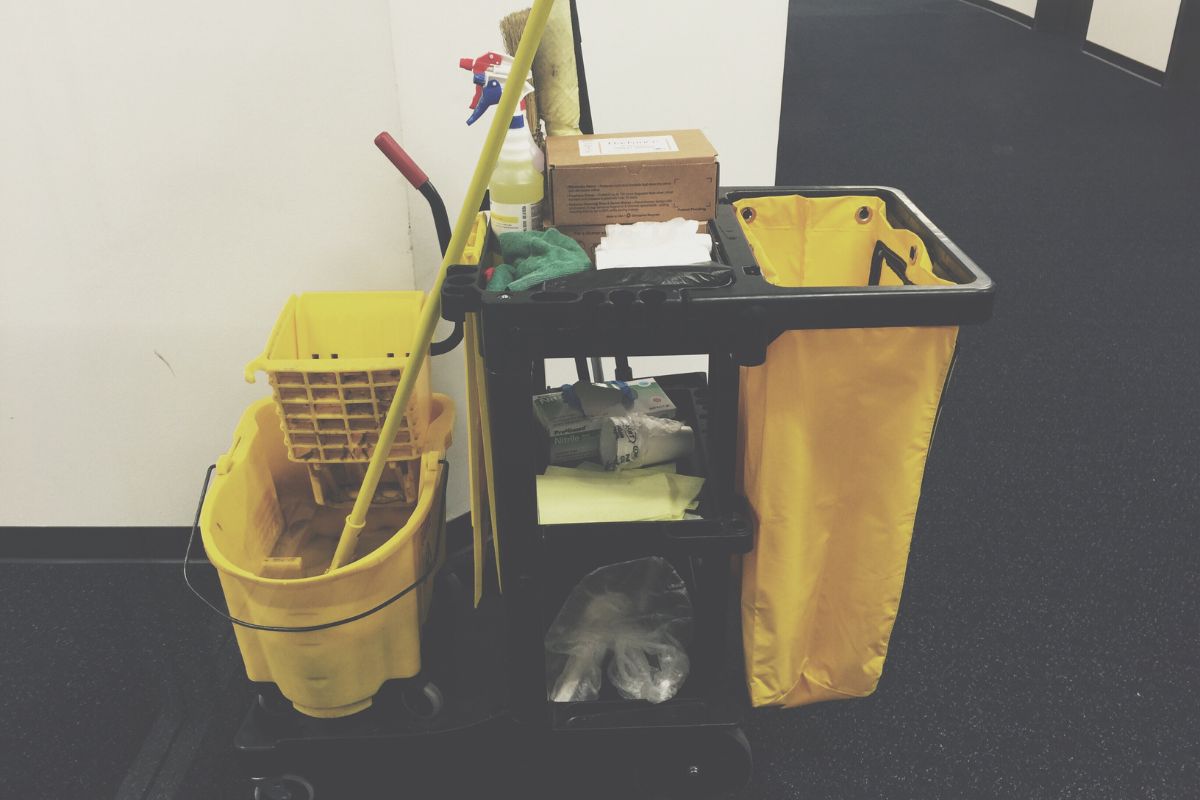
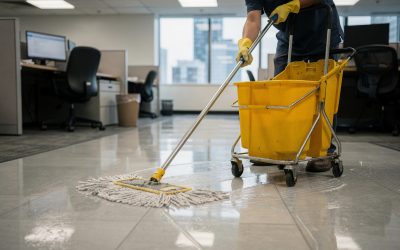
Companies that operate in industrial environments, such as factories and refineries, face a unique set of challenges when it comes to keeping their facilities clean. Most people think a mop and a bucket of water will suffice to clean these spaces, but in reality, professional-grade equipment and chemicals are often required.
Let’s take a look at some of the most commonly used equipment in industrial cleaning. We will also talk about the benefits of using these tools and how they can help you get the job done right. Stay safe out there!
Choosing Reliable Industrial Cleaning Partners
Industrial sites typically have advanced cleaning needs that require professional janitorial services. Hiring professional cleaners with the right equipment and experience to clean your site can improve workplace safety, reduce risk, and streamline your daily operations.
PPC creates specific cleaning plans for industrial sites and facilities that include:
- Equipment suitable for production areas
- Techniques to control dust and improve air quality
- Attention to high-traffic areas for increased safety
- Sanitizing staff areas for employee health and comfort
- Proper waste and debris disposal
- Emergency cleaning solutions
- Flexible scheduling and scaling to match operational needs
… and more.
Learn more about how to hire industrial cleaners in this guide:
How to Choose the Best Professional Industrial Cleaner
Essential Equipment for Industrial Cleaners
All of the tasks listed above require specific equipment. Here’s an overview of the most widely used cleaning tools for many industrial environments:
Pressure Washers
Pressure washers are a versatile and effective tool for cleaning industrial sites. They can be used to remove built-up dirt, grime, and debris from surfaces, as well as to strip paint and other coatings. Their high-pressure output allows cleaning teams to reach tight spaces and corners that are difficult to access with traditional methods.
When used properly, pressure washers can quickly remove stubborn stains that have set in over time and help maintain a clean, safe work environment.
Pressure washers at a glance:
- Remove heavy dirt, grime, and debris
- Effectively strip paint and surface coatings
- Access to tight or hard-to-reach areas
- Eliminate stubborn, set-in stains
- Provide support for overall site safety and cleanliness
Commercial Vacuum Cleaners
Industrial vacuum cleaners are designed to handle the unique cleaning challenges posed by commercial and industrial environments.
A residential vacuum cleaner is designed primarily to clean carpets and upholstery, whereas industrial vacuums are built to take on heavy-duty cleaning tasks, like removing hazardous materials, handling large volumes of debris, and reaching hard-to-reach places.
In essence, industrial vacuums are essential for keeping commercial and industrial sites clean and safe, while residential vacuums are perfect for everyday cleaning in your home.
Commercial vacuum cleaners at a glance:
- Designed for heavy-duty industrial cleaning tasks
- Able to handle large volumes of debris
- Safely remove hazardous materials
- Improve access to hard-to-reach areas
- Greater durability compared to residential vacuums
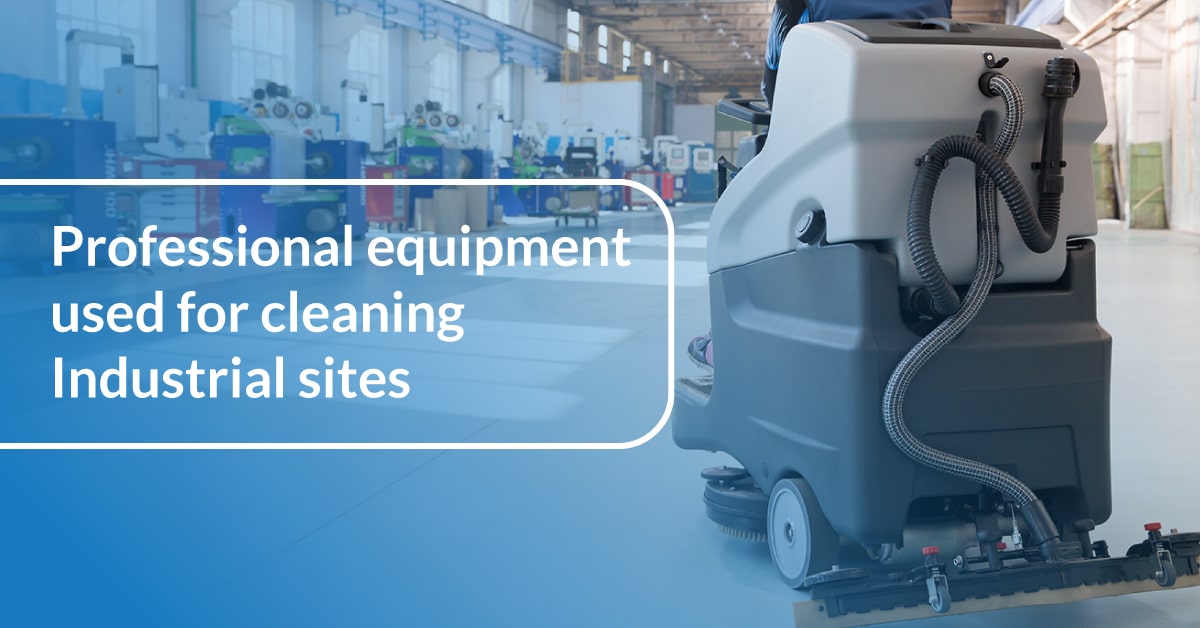
Floor Scrubbers
An industrial site can be a difficult environment to keep clean. There are often large open space areas, with plenty of nooks and crannies for dirt and debris to accumulate. A floor scrubber is an important tool, designed to clean large open spaces quickly and effectively.
They are ideal for removing built-up dirt and grime, oil, and grease stains, while also prolonging the life of your flooring by preventing dirt and debris from being ground into the surface.
Floor scrubbers at a glance:
- Efficiently clean large, open floor areas
- Remove dirt, oil, grease, and grime
- Reduce wear and damage to flooring surfaces
- Improve cleanliness in high-traffic zones
- Faster results compared to manual cleaning
Related: Tips to Keep High-Traffic Areas in Your Facility Clean
Steam Cleaners
Steam cleaners are especially effective in industrial settings where heavy machinery and contamination risks are often present. They use high-pressure steam to break down grease, dirt, and grime, making surfaces easier to clean without relying solely on chemicals.
Steam cleaners can also disinfect surfaces, killing bacteria and viruses, making them ideal for use in industrial settings where contamination is a risk.
Steam cleaners at a glance:
- Breakdown grease and grime using high-pressure steam
- Effectively clean around heavy machinery
- Disinfect surfaces
- Reduce bacteria and viruses, making the work area safer for employees, clients, and visitors
- Provide contamination control
Floor Buffers & Polishers
Floor buffers and polishers are used to clean, restore, and maintain hard floors, such as concrete, tile, stone, and wood. Buffers use rotating pads or brushes to scrub the floor, while polishers focus on enhancing appearance by creating a smooth, high-shine finish.
These machines are typically used in large commercial and industrial settings, like hotels, office buildings, and grocery stores, where maintaining floor condition and appearance is critical.
Buffers and polishers at a glance:
- Clean and maintain hard floor surfaces
- Scrub using rotating pads or brushes
- Polish floors to a high-shine finish
- Perfect for large commercial and industrial spaces
- Improve floor appearance and longevity
Related: Buffing Vs Polishing Commercial Floors
Get Your Plan for a Clean & Efficient Facility
Professional industrial cleaning relies on specialized equipment to clean and sanitize large areas. Using the right type of equipment for the job and trusting professionals who are trained to use it effectively are both essential for getting the best results.
With the proper equipment and expertise from Picture Perfect Cleaning, industrial facilities can maintain cleaner, safer, and more compliant workplaces for everyone who sets foot in them. Contact us today for a custom plan to clean your business.