Summary:
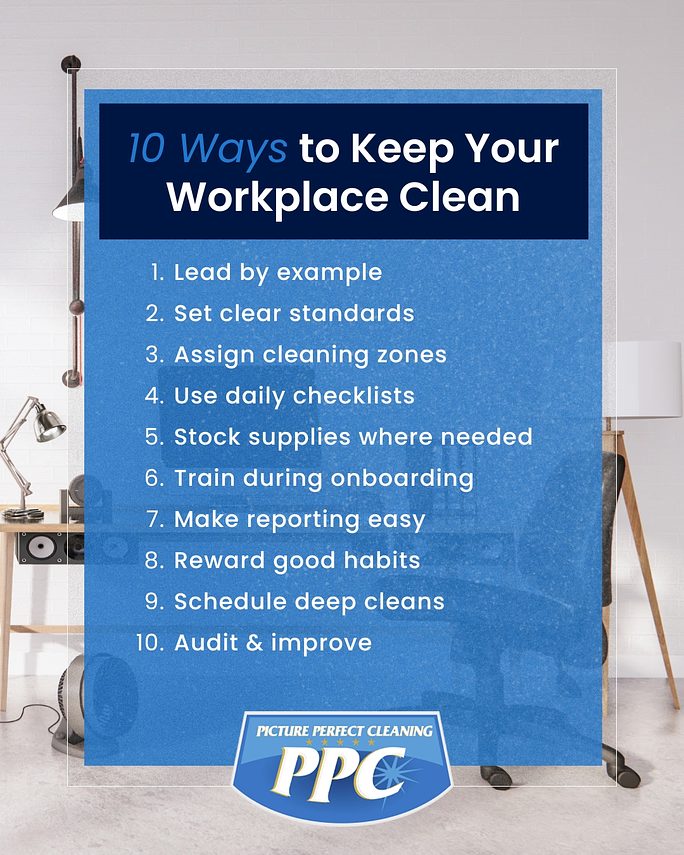
To keep your workplace clean, create a culture where clean is the default expectation. Set clear standards with a one-page policy, assign zones, and use daily checklists. Stock supplies where they’re needed, post signage, and train during onboarding. Make reporting easy, reward good habits, and address repeat issues. Schedule biannual deep cleans, audit monthly, and work with a reliable cleaning partner to keep standards high, even during busy periods.
Keeping the workplace clean is important because it encourages employees to be more effective and productive. From time to time, all businesses face the challenge of maintaining a clean and organized workplace.
Professional commercial cleaning services are one of the best ways to keep your workplace clean, but it also helps to have your in-house team take some responsibility for your space. In fact, it’s crucial to find ways to encourage your employees to keep things clean so you can keep providing exemplary service to clients and customers.
Let’s talk about a few ways to establish and enforce cleaning habits in the workplace.
1) Lead by Example
When leaders model cleanliness, it sets the tone for the entire workplace. Employees are far more likely to follow habits they see consistently practiced by management.
Action steps
- Keep your own desk and shared areas camera-ready at all times.
- Fix small messes immediately (don’t walk past them).
- Call out (and thank) good behavior in the moment.
- Add “2-minute reset” to the end of your daily schedule.
There are measurable benefits to setting a higher standard for cleanliness at work yourself. Remember: clean businesses make better impressions on clients and customers, as well as making you and your team more productive.
Learn More: Perception is Reality: How Cleanliness Impacts Customer Perceptions of Your Business
2) Define Standards With a One-Page Policy
Clarity eliminates confusion and excuses. A short, specific policy ensures everyone knows exactly what’s expected and how to meet those standards.
Action steps
- Write specific, observable rules (e.g., “no dishes left overnight,” “trash emptied daily,” “fridge purge Fridays 4 pm”).
- Include who owns what, where supplies live, and how to report issues.
- Outline progressive consequences for repeat non-compliance.
- Review at onboarding + quarterly; post it in kitchens, print rooms, and washrooms.
3) Assign Ownership By Zone (Not “Everyone, Always”)
When “everyone” is responsible, no one truly feels accountable. Assigning zones creates clear ownership and ensures all areas are consistently maintained.
Action steps
- Map the workplace into zones (kitchen, meeting rooms, printers, reception, shop floor).
- Assign a primary owner per zone; rotate monthly to share load.
- Set a quick daily check (2–5 minutes) and a weekly reset (10–15 minutes) per zone.
- Use a visible roster so coverage is obvious during PTO.
4) Build Simple Daily/Weekly Checklists
Checklists make expectations visible and repeatable. They turn “cleaning” into a short, defined process rather than a vague request.
Action steps
- Daily: wipe surfaces, reset chairs, empty bins at threshold, dishes done, floors spot-swept.
- Weekly: disinfect touchpoints, fridge purge, microwave/coffee descale, supply top-ups.
- Add a “closeout” checklist for last one out; a “pre-meeting reset” for boardrooms.
- Keep checklists to one page; laminate and hang with dry-erase tick boxes.
Keeping these lists can make it much easier to maintain even busy areas with high foot traffic. It’s an effective way to keep everyone in your workplace aware of the tasks that need to be completed, no mater how many other things are taking place.
Related: Tips to Keep High-Traffic Areas in Your Facility Clean
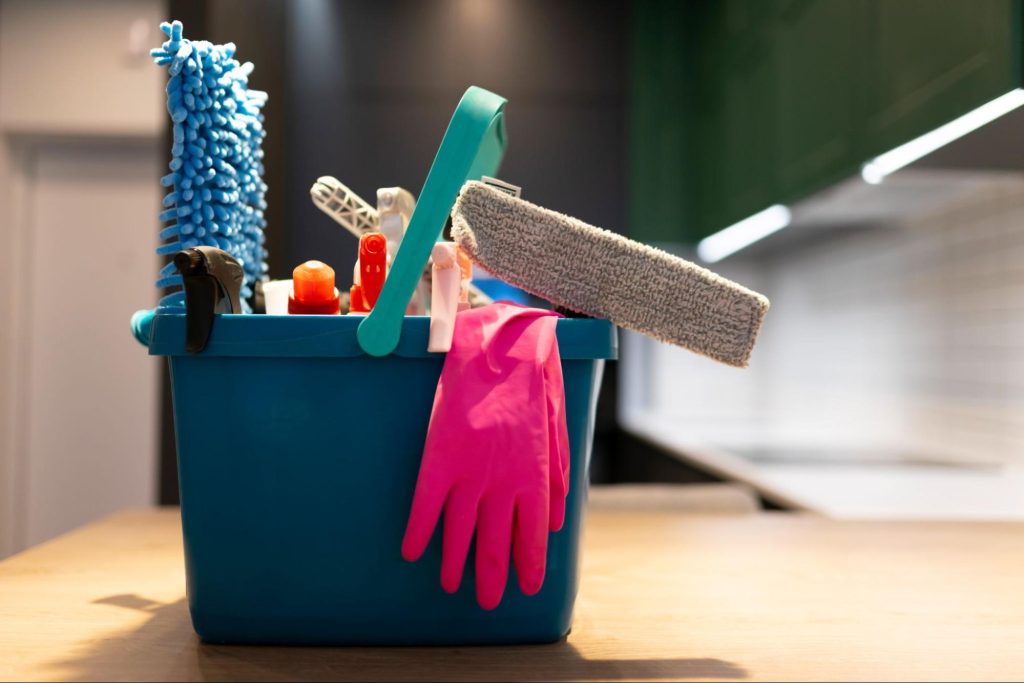
5) Make Clean the Easy Choice (Supplies & Signage)
People are more likely to act if tools are within reach and instructions are obvious. Remove barriers so cleaning feels effortless.
Action steps
- Place cleaning caddies where messes occur (kitchen, copy/print, shop stations).
- Label everything: bins (landfill/recycle/compost), shelves, drawers, and spray bottles.
- Set a restock cadence (e.g., Tuesdays) with one named person responsible.
- Post quick visual guides (what goes where, how to run the dishwasher, spill protocol).
6) Bake It Into Onboarding & Ongoing Training
Habits stick when they’re taught from day one and reinforced over time. New hires should learn cleaning standards alongside job skills.
Action steps
- Include a 10-minute cleanliness walk-through on day one.
- Demo checklists and zone responsibilities; have new hires complete one cycle.
- Pair new staff with a “zone buddy” for the first month.
- Refresh training after moves/renos or when audit scores dip.
7) Create Fast Reporting & Escalation
Quick reporting prevents small messes or maintenance issues from becoming big problems. Clear channels make it easy to take action.
Action steps
- Set up a dedicated channel/form (e.g., “#facilities-help” or QR to a short form).
- Define SLAs (e.g., spills: immediate; supply restock: 24 hours; maintenance: 72 hours).
- Name a “manager on duty” for facilities each week.
- Track repeats to spot problem areas and adjust policy or layout.
8) Recognize Wins & Apply Consequences Fairly
Recognition builds motivation, and fair consequences maintain standards. Both are essential to sustaining a culture of cleanliness.
Action steps
- Give monthly shout-outs (gift cards, preferred parking, lunch) for high standards.
- Run a rotating team challenge (best zone score over 30 days).
- Let peers nominate coworkers for “clean hero” moments.
- Document repeated misses and follow the policy consistently.
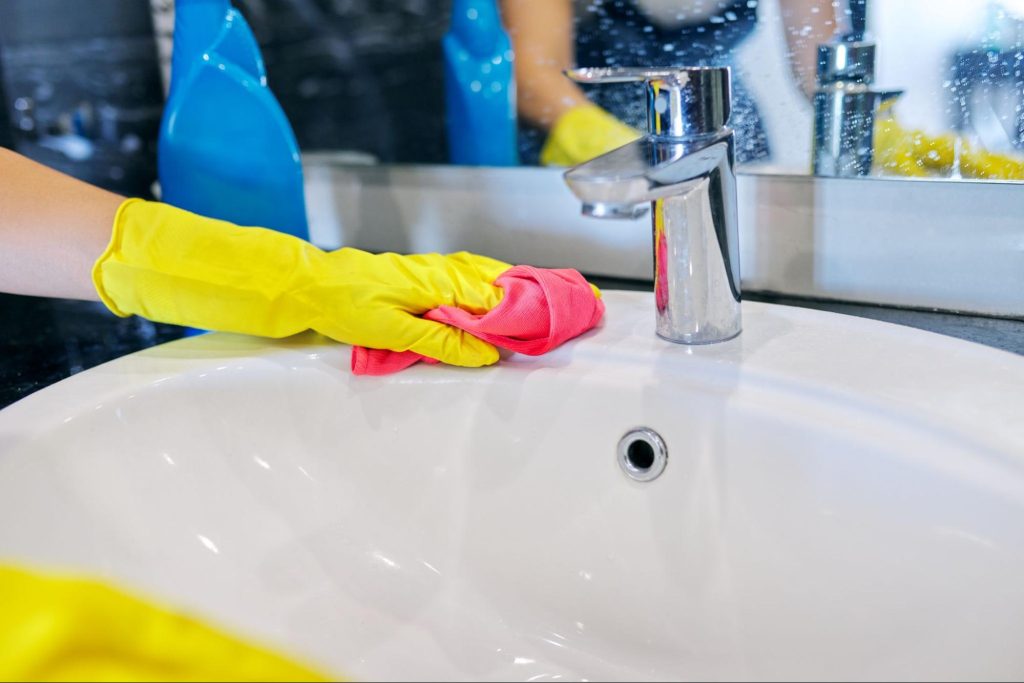
9) Schedule Regular Deep Cleans
Even with daily upkeep, some tasks need focused time and effort. Deep cleans refresh the workplace and catch overlooked areas.
Action steps
- Book biannual whole-office/shop deep cleans; share the scope and date early.
- Assign prep tasks (clear surfaces, empty fridges, cover equipment).
- Decide what’s in-house vs. what a pro crew handles (carpets, high dusting, floor care).
- Do a brief safety talk if chemicals/equipment are involved.
Remember: working with professionals is often useful, even if you have your own cleaning plan.
Your team needs to be able to focus on business operations, which means it’s natural for them to defer cleaning tasks when they have other work to do. And hiring dedicated in-house cleaning staff is typically much more expensive than partnering with a cleaning company who has their own equipment and experienced staff.
Related: The Ultimate Guide to Janitorial Companies in Calgary & Edmonton
10) Measure & Iterate (Audit, Don’t Argue)
Regular audits keep standards from slipping and help you spot patterns. Use the data to improve processes rather than point fingers.
Action steps
- Run a monthly 10-minute audit with a simple scorecard per zone (photos optional).
- Review scores in an ops meeting; choose one improvement per month.
- Tweak layouts (move bins/supplies closer), update signage, or adjust checklists.
- Share trends so everyone sees progress (or slippage).
Commercial Cleaning Is a Big Job (But You Don’t Have to Do It Alone)
As a business owner or property manager, you probably already have enough on your plate without adding “full-time cleaner” to your job description. But you don’t have to choose between keeping your workplace spotless and keeping operations running smoothly.
Partnering with a professional commercial cleaning company like Picture Perfect Cleaning gives you flexible support from local experts who understand your industry. We handle the cleaning to the highest standard, so your team can stay focused on what they do best. You get to focus on growing your business with the peace of mind that your premises will look pristine no matter how busy things get.
Remember that your employees are your greatest assets. Pair them with a reliable commercial cleaning company and your office will run like a well-oiled machine year-round!